Wednesday, February 8, 2012

Sunshine in February - Community Energy Solutions Report

Dear Clean Energy Supporter,
After two and a half months of outreach and another month and a half of site work, the Go Solar Bainbridge and Go Solar Bellingham were closed on January 30. Our campaign helped add 69.6 kilowatts (kW), or 25% more solar energy capacity to Bellingham. Bainbridge saw an amazing level of interest that brought 201.63 kW, a more than doubling of the amount of solar energy on the Island.

What makes these campaigns exciting is that nearly all of the solar modules purchased are made in Washington; coming from Itek Energy, a manufacturer in Bellingham.  Also, when all of the systems are installed, these pilot rounds of the Go Solar Washington initiative will avoid over 150 MT of carbon each and every year from being pumped into the atmosphere. The multipliers of benefits are truly more than just watts.

Our work on Bainbridge Island continues as we turn our focus to the Community Solar Project at the City Hall. Community Solar is a means for more people in Washington State to enjoy the benefits of owning a solar energy system, who otherwise could not due to shading, property ownerships, or other barriers. We hosted an informational meeting last month on January 17th. If you missed that meeting but are interested to find out more about this innovative project, and what it means for you and the City, please contact Joe Deets.

Finally, a brief note about a change at the Board of our organization. Doug Maraist is heading up the Board as President while I will have more time to work on the Go Solar initiative. Joe Deets has resigned from Community Energy Solutions as Executive Director and will dedicate his time to Community Solar Solutions, an organization that focuses on community solar projects. Last but not least, please join me in welcoming Ed Flanders to our Board. Ed brings with him an extensive IT and entreprenural experience, and is keenly interested in sustainable energy solutions.

We look forward to continuing working with you, our supporters, to creating a more sustainable world through clean energy.

Your sincerely,
 Signature
Tammy Deets, Community Energy Solutions

Saturday, February 4, 2012

Believe it: Solar power works well in Washington

EDMONDS — Solar energy installations in the Pacific Northwest are proving their worth, despite persistent public misconceptions that winter’s overcast skies make solar technology useless.

Chris Herman, owner of Winter Sun Design in Edmonds, concedes winter solar rays aren’t as good as summer ones, but he knows that cloudy days still collect solar energy and that the region still can gain benefits from solar installations.

“People don’t realize that a passive solar home in Western Washington can still get 50 percent of its space heating from solar features, while adding less than 2 percent to the cost of home construction,” Herman said.

Credentials behind his views include his 25-year business venture designing houses with passive solar features, sustainable “green” building design and consulting services. He founded Solar Washington, the Northwest Eco-Building Guild and Sustainable Edmonds, and is interim president of the Edmonds Community Solar Cooperative.

Trained as a certified professional building designer, Herman regularly provides classes in solar energy systems at the University of Washington. His projects have included a solar heated cabin on Lopez Island and a passive solar sunroom for a Lake Roesiger-area home.

Herman has been using low-toxin building materials and energy systems since 1987, providing additional insights to home building options for people with allergies.

“A good passive solar home requires no air conditioning, even in Eastern Washington, because it’s design provides architecturally for proper heating, cooling and day lighting,” he said. “It employs standard construction practices and materials and the design can achieve 20 to 30 percent savings on heating with no added construction cost. We also work with the layout of windows and room areas, as well as roof overhangs and venting, plus the prevailing local weather patterns.”

click here to read entire article.

Friday, December 16, 2011

Community Solar in Olympia, Washington Moves Forward

Bainbridge Island city hall gets charged up - Bainbridge Island Review

By RICHARD D. OXLEY
Bainbridge Island Review Staff Writer
December 15, 2011 · Updated 3:56 PM 

Bainbridge Island’s city hall is looking to be a shinning example in an entirely new way after the city council approved a contract allowing solar panels to be installed on its roof.

The contract solidifies a relationship between the city and Community Energy Solutions in order to place solar panels on the roof of city hall on Madison Avenue. Through this agreement, the city will be able to lessen its energy costs while also making a public effort to be environmentally conscious.
“For city taxpayers it provides savings on money that would otherwise be used to pay electric bills,” Council Member Barry Peters said. “For a community that cares about the environment, it allows us to use less of coal-fired electricity that normally supplies our island.”

The city will own the property that the panels will be on, while CES will form a subsidiary, Community Solar Solutions, to purchase and manage the solar panel system.

City hall has three tiers of roof covering it — upper, middle and lower. The middle roof, the largest of the three, is where the solar panels will be installed. The roof faces south, which is an ideal orientation for the panels to collect light.

The panels will be constructed by Itek Energy, a company based out of Bellingham. A total of 309 photovoltaic panels will line the roof of city hall, with a capacity of 240 watts each. This puts city hall’s solar energy production just under the maximum 75 kilowatts allowed on a structure by law, according to Joe Deets, director of CES, and also president of the subsidiary CSS.

City hall will receive half the retail value of the energy furnished by the panels.

No charge
Deets said that the price tag on the project will run around $505,560 — or $1,633 per panel — and while it is difficult to say exactly when installation will begin, he is hoping that work will begin by March of next year.

“It is important to remember that this project will be 100 percent funded with private money,” Deets said. “The city will have no financial obligation, and in fact will receive rent from the project owners.”

CSS will pay for the panels through investors who will in turn receive benefits from state and federal incentives for using solar energy. Investors also receive a financial benefit from when the panels produce energy that is sold to Puget Sound Energy.

CES still seeks investors but Deets, an investor himself, is confident the project will be fully supported in time to install the panels.

At the conclusion of the contract in 2020, the city will have the option to purchase the solar panels, or have CSS remove them.

“It’s one of those rare opportunities to do something good for the planet that saves taxpayers money and creates an investment opportunity for the community,” Peters said.

Peters speaks from experience. He had panels installed on his own home and has been observing their benefits for four years.

“We have met almost 90 percent of our electricity needs over the past four years,” Peters said. “What people don’t realize is that our weather in the summer time gives us many months of solar energy, and our laws in the state of Washington allow us to bank the surplus in the summer so we can use it in the winter.”

Producing so much solar energy during months of adequate sunshine allows people such as Peters to do something called “net metering.” With net metering the excess energy is sold to PSE, who then holds that as a credit — ultimately lessening their power bill in the winter when solar panels aren’t as active.

“So solar works and it’s never been less costly than it is right now both in terms of the cost of the panels themselves and the incentives from the federal and state level,” Peters said.

Contact Bainbridge Island Review Staff Writer Richard D. Oxley at roxley@bainbridgereview.com or 206-842-6613.

Thursday, December 15, 2011

US Solar Industry Grows More in Third Quarter of 2011 Than in All of 2009

Inhabitat
by Brit Liggett, 12/14/11

A report released today by the Solar Energy Industries Association and GTM Research shows that solar power installations in the United States grew more in the third quarter of 2011 than in all of 2009. The growth in the third quarter of 2011 totaled more than 240% of the growth in the third quarter of 2010, and by year’s end the United States will have installed 1.7 gigawatts of solar energy – the same amount of energy as two nuclear power plants.

The pace of solar progress is expected to keep on growing in the current quarter as large-scale solar utility projects that have been in the works for years finally start sending energy into the grid. A full 200 MW of the 449.2 MW growth was made up of large-scale solar projects that were finally completed. “There has always been a big pipeline of utility-scale projects that take a while to get constructed,” Kann said in an interview. “We are expecting to see that through 2012.” In contrast, solar growth totaled 887 megawatts last year and 435 megawatts in 2009.

The state of California led the pack by hosting a full 44% of all solar installations. In California, homeowners have been opting into programs from third-party solar leasing companies, where the homeowner incurs no up-front costs for their array — it is paid for either over time or with the renewable energy that is sent into the grid. Solar power enthusiasts are hopeful that the 2012 solar growth numbers will stay high, but their hopes might be thwarted if the U.S. Treasury Department’s 1603 program — which provides cash grants to developers for solar installations — is not extended into the new year.

Thursday, December 1, 2011

RECENT ITEK INSTALLS - Ferndale Highschool

Featured Project 1
We're very excited to share with you the recent install of Itek solar modules at Ferndale High School. The installation is located in the student quad as part of an ongoing renewable energy demonstration project that also includes a Skystream 3.7 wind turbine that was installed last year. The system includes 10 Itek panels installed on a standing seam metal roof, using non-penetrating S-5 Clamp mounting system, with a 3000 Watt SunnyBoy Inverter.

Ferndale High School has an impressively comprehensive renewable energy program that not only includes the installation of this solar array and windturbine, but also includes a student design-build project creating small solar panels from scratch for charging cell phones (they actually solder the wires/cells/etc themselves). The students also produce bio-diesel from cafeteria waste to run their on-campus 'gator' vehicle, and they have a comprehensive design and engineering program that even includes the latest in 3-D printing technology so that students can see their designs come to life.

Money for the solar array was donated by Puget Sound Energy and Conoco Phillips as part of their Community Solar for Schools program to further the education of kids about renewable energy here in WA. Click here to learn more about this program.

We're honored to be part of this very exciting education in renewable energy!

Tuesday, November 22, 2011

RECENT ITEK INSTALLS - Lippert Residence on Mercer Island

Lippert Residence - Mercer Island, WA
  
Al & Meg from Mercer Island placed one of the first orders for a Nissan LEAF. Wanting to make sure the all-electric vehicle was powered by truly green energy, they went solar at the same time. Their 16 ITEK 240 module (3.8kW) system is to produce over 3500kWhs its first year and over 100,000 over its 30-year or more life-span. Their LEAF averages around 3.6 miles per kilowatt hour. That's over 12,000 miles per year powered from the modules on their roof!

They'll also save the state of Washington the need to waste over 9000 gallons of water per year.  An NREL study of water use for electricity production shows Washington loses 2.7 gallons per kWh from evaporation at hydro power reservoirs and thermal power plants click here (page 11):  

The Lippert's system is a great example of clean electricity use and production; a model for world energy that has finally come of age.

Installation by Sunergy Systems

Tuesday, November 15, 2011

Solar panels could go up on Whatcom Museum's Lightcatcher building - Bellingham Herald

KIE RELYEA
Last updated: November 11th, 2011 01:45 PM (PST)
 
BELLINGHAM - About 165 solar panels could go up on the roof of the Whatcom Museum's Lightcatcher building to convert sunlight into electricity.

The project would tap into a new state incentive for solar projects that are public-private partnerships, according to Ryan Nelson, resource conservation management specialist at Bellingham Public Works.
Such efforts are known as community solar projects and aim to support the state's emerging green economy. To qualify, such solar operations must go up on a municipal facility and then, typically, be funded through private investors, according to Nelson...

Read more: http://www.thenewstribune.com/2011/11/14/v-printerfriendly/1902095/solar-panels-could-go-up-on-whatcom.html#ixzz1dqKdUWly

Friday, November 4, 2011

Itek Module at the Seattle International Auto Show


Community solar panel project in the works for Lightcatcher Building - Bellingham Business Journal

The Bellingham Business Journal
by
Filed on 25. Oct, 2011 in News

The Lightcatcher Building in Bellingham may soon have a new addition to its roof: a $350,000 solar panel installation.

Joe Deets, executive director of Community Energy Solutions, stands in front of the Lightcatcher Building, where he hopes to install a community solar project by spring 2012. The city of Bellingham is currently negotiating the details of the lease. Isaac Bonnell | BBJ
The city of Bellingham is currently negotiating a lease with Community Energy Solutions, a nonprofit based in Bainbridge Island. Community Energy Solutions was chosen after the city issued a request for proposals in April for solar installations on city-owned buildings.

The project would be the first of its kind in Bellingham, using a state law enacted in 2009 that gives incentives for community solar installations, meaning projects owned by a group of people rather than one person or company, on buildings owned by local governments. Details of the lease are still being worked out and the final lease will have to be approved by the City Council, said Ryan Nelson, the city’s resource conservation management specialist.

Several city buildings were considered for solar installations, such as the Sportsplex and the Parkade, but the Lightcatcher stood out as the best location, Nelson said.

“One of the issues that came up with regard to many of our facilities was scheduled roof replacements. That’s where the Lightcatcher came out as a shining star, since it’s a new building,” he said.

If a lease is approved, Community Energy Solution would build a 40 kilowatt solar installation capable to producing 44,000 kilowatt-hours per year on average, enough to power about four homes. The project would cost between $350,000 and $400,000 and would be funded by a group of local investors, said executive director Joe Deets.

“We’re looking for 10 to 20 people for the community solar project,” Deets said. “I wouldn’t want someone stretching themselves financially — it has to be someone comfortable with the investment.”
By taking advantage of state incentives for renewable energy production and for using solar modules made in Washington, the project is expected to see a 5 percent to 6 percent return on investment by the time the state incentives expire in 2020, Deets said.

The city of Bellingham could also benefit from the solar install, Deets added. After 2020, the city will have the opportunity to buy the solar installation from the group of investors.

“This gives the city a chance to go solar very cheaply,” he said.

Along with the community solar project on the Lightcatcher Building, Community Energy Solutions is also launching a campaign for residential solar installations called Go Solar Bellingham. The initiative seeks to lower the cost of solar energy by offering free site assessments and by bringing solar module manufacturers, solar installers and community lenders together to offer discounts.

“Our goal is to essentially double the photovoltaic installations in Bellingham, both in number and in size,” Deets said.

For more information, check out a Go Solar Bellingham workshop from 6 p.m. to 8 p.m. Oct. 25 at the RE Store, or from 10 a.m. to 11:30 a.m. Nov. 12 at the Bellingham Library branch in Fairhaven.

Now’s a good time to Go Solar on Bainbridge | Bainbridge Island Review | Guest Column | Oct. 28

It’s October, and the long rainy season is just beginning. That’s why it’s the perfect time to go solar.

Counterintuitive as it sounds, there’s no better time to reign in your electric bill and put some sunshine in your wallet.

Thanks to a state law championed by former State Sen. Phil Rockefeller and a local consortium headed by a Bainbridge Island non-profit – along with solar installers, manufacturers and lenders – homeowners and businesses can now receive the same savings on solar programs previously reserved for large customers. And if your roof is in the shade, the community solar project at City Hall may be just for you.

An initiative known as Go Solar Bainbridge is at the forefront of the Go Solar Washington campaign. It’s created to nearly double our community’s use of solar energy by offering discounted, high-efficiency solar energy systems through the power of bulk purchasing.

Go Solar Bainbridge is led by Community Energy Solutions, a not-for-profit that has served the island since 2008.

It has selected solar installer Sunergy Systems based on competitive pricing and professional qualifications, and two financial institutions with deep roots in the Northwest – Puget Sound Cooperative Credit Union and Umpqua Bank.

They are among a short list of financial firms in the state willing and ready to make affordable solar energy loans.

If you’re wondering how solar energy works in a place that is gray and overcast for much of the year, you’d be surprised to learn that our region is nearly as solar friendly as sunny Sacramento, Calif. I recently attended one of the Go Solar Bainbridge workshops and learned an interesting fact.

Without getting into too much technical speak, suffice it to say that the annual number of kilowatt hours per kilowatt produced from a typical photovoltaic installation on Bainbridge Island and Puget Sound is 1,100 kilowatt hours compared with Sacramento’s 1,265.

The reason for this phenomena is that we have a relatively attractive solar season in the Pacific Northest from May to September when the days are long and temperatures are mild.

These conditions are ideal for producing photovoltaic energy, according to the experts.

Locations such as Phoenix or Las Vegas have plenty of sun but too much heat, which makes these systems less efficient. Even in winter when it is overcast and cold on Bainbridge Island, solar energy systems are still producing clean electricity by capturing diffuse sun light.

Going solar in your home and business now makes sense because of falling prices for solar systems and some attractive Washington state incentives.

What’s more, Go Solar Bainbridge works with Itek Energy of Bellingham – producing high efficiency solar panels that help our local economy, and gives this campaign a unique “Made in Washington” stamp.

Here are a few more reasons why you should consider solar energy:
  • Each installation receives a 30 percent federal tax credit;
  • Purchase of Washington made solar modules and inverters could provide you with up to a $5,000 annual utility incentive;
  • Accelerated appreciation for businesses; and security from rising electricity rates;
  • State law that allows you to charge back excess electricity to your utility;
  • Ability to increase your home resale value as resale statistics show “green” houses sell faster and for more money;
  • Showcase your “environmental values” to neighbors/customers.

There are only about 40 solar programs (approximately 180 kilowatts) in place on Bainbridge Island. The goal of the campaign is to double the number of kilowatts through incentives, tiered pricing and bulk purchasing.

While this sounds ambitious, I believe islanders can step up to the challenge because this is a campaign that is good for you, good for the community and good for the environment.

Site assessment workshops
Free site assessments of your home or business on Bainbridge Island or to discover more about solar energy, visit www.GoSolarBainbridge.com
• Wednesday, Nov. 2, from 6:30-8 p.m.  at the Bainbridge Public Library
• Wednesday, Nov. 16 from 6:30-8 p.m. at OfficeXpats, second floor of the Pavilion.

Kevin Dwyer, former executive director of Bainbridge Island Chamber of Commerce, is consulting with Community Energy Solutions.

Wednesday, November 2, 2011

State incentives kick-start Bellingham solar panel company - Bellingham Business Journal

Bellingham Business Journal
by
Filed on 02. Nov, 2011 in Features

John Flanagan started Itek Energy in Bellingham this year and plans to produce up to 120,000 solar panels a year out of his facility in Irongate. The solar panels qualify as made in Washington, a certification that more than doubles the incentive available to customers. Isaac Bonnell | BBJ
Despite Washington’s reputation for gloomy weather, the market for solar panels is looking brighter thanks to state incentives that pay homeowners and businesses up to $5,000 for producing solar energy.

Here in Bellingham, that incentive program has led to the launch of Itek Energy, a solar panel manufacturer that opened earlier this year in an 18,600-square-foot building in Irongate and is ramping up production.

Though the incentives are paid to the energy producer, they were put in place to help create demand for local solar panel manufacturers by paying producers nearly four times more for solar arrays made here in Washington.

Rather than the base rate of 15 cents per kilowatt-hour of energy produced, the state will pay 54 cents per kilowatt-hour for energy produced with solar panels and an inverter that are made in Washington.
“The incentive package is one of the best in the whole country,” said John Flanagan, president of Itek Energy.

The incentive program for renewable energy production was passed by the Legislature in 2005 and also includes wind power and anaerobic digesters. Itek is one of just two companies in the state — the other is Silicon Energy in Arlington — making solar panels and inverters that qualify as made in Washington, said Mike Gowrylow, spokesperson for the Department of Revenue, the agency that issues the certification.

Expanding production
Getting the company up and running has been time consuming, Flanagan said, from purchasing equipment and setting up the production line to meeting state requirements and getting product safety certifications. The UL rating alone took about eight months to get.

To date, Itek has produced around 100 solar panels, but Flanagan plans to ramp up production with the start of the new year.

“Every day we’re producing more and more. We should be able to make 100 a day in a couple months. With our equipment now we have the capacity to produce 30 megawatts a year,” about 120,000 solar panels, Flanagan said.

At full production capacity, Flanagan plans to employ 40 to 50 people working around the clock in three shifts.

Much of the production line is automated, involving machines that lay individual solar cells in a line and solder them into a string of 10. Six strings make up a full solar panel, which also includes layers of glass and insulated backing that are all laminated together before being placed into an aluminum frame.

Itek does not make any of the materials for the solar panels, but since the company assembles them into a finished product, that qualifies as made in Washington, Flanagan said.

Solar panels are only half of the equation though. The power that the panels produce has to go through an inverter that switches the current from direct current (DC) to alternating current (AC).
Also, the state offers incentives for using inverters that are made in Washington.

Though Itek designed and developed its own solar panel, Flanagan decided to partner with Texas-based Exeltech to make the inverters. Starting in December, Itek will start building inverters designed by Exeltech.

Overcoming high prices
The greatest hurdle for Itek and the whole solar industry is the high upfront cost for customers, said Joshua Miller, project manager for the solar installation company Western Solar. In fact, certified made in Washington panels cost about 30 percent more than panels made by larger companies that have economies of scale.

Despite the higher cost, Miller is seeing a jump in demand for locally made panels because the state incentive is better and customers can pay off the investment in about seven years, compared to 10-15 years for out-of-state panels. Half of the solar panels he installs now qualify as made in Washington, he said.

“So even though you’re paying more upfront, you’re payback is much quicker,” Miller said, adding that there is also a feel-good factor to buying panels made in Washington. “The people that tend to buy solar panels are interested in locally produced power and having those panels built here falls right in line with that.”

As Itek grows and realizes production efficiencies, the price of its solar panels should come down, making it more attractive for the average homeowner, Flanagan said. But reaching that point would be difficult without the state incentives.

“In our business, volume is very important,” he said. “What we’re hoping is that when those incentives diminish in 2020, the market will have grown enough to be sustainable. If all goes well, what we’re hoping to achieve is greater acceptance of solar.”

Tuesday, October 25, 2011

City Approves Solar Panels First Step: City Hall Roof to Be Evaluated - Inside Bainbridge

INSIDE BAINBRIDGE
by Sarah Lane on October 13, 2011.

Last Wednesday, October 5, The City Council approved the first steps of a community solar project, authorizing an independent organization to evaluate the City Hall roof for potential installation of solar panels. The organization, Community Energy Solutions (CES), will at its own expense work with an engineering firm to determine whether the roof is structurally able to withstand the weight of hundreds of panels. The bill was approved by a 7-0 vote.

The bill was introduced in response to Washington legislation enacted in March. That legislation, which was championed by State Senator Phil Rockefeller, is designed to lower the state’s carbon footprint by using state and federal incentives to locate investor-financed solar projects on government property. The legislation is intended to generate rooftop lease revenue and electric energy savings for local governments and taxpayers.

iTek Sun Pod
itek Sun Pod (created by itek of Bellingham) on display outside the Library.

If panels are installed, the city will benefit from all of the electricity generated but will pay for only half of it. Council member Barry Peters explained how it will work. As a result of the state legislation, investors will be paid up to $1.08 per kWh generated by the panels (as compared to the current rate of $0.08 cents per kWh generated by PSE)—which is the highest rate available through the program. This rate is available because the panels are manufactured in Washington. Peters says there are likely to be 300 panels generating thousands of kWh per year. He explains that the legislation benefits homeowners who install solar as well: In four years, the rate has gone from $0.15  to $0.54 per kWh.
Photovoltaics Exhibit
At the Harvest Fair, Community Energy Solutions had kids make water-color leaves as a way of understanding photovoltaics. The leaves were exhibited in October's Arts Walk.

Background
After the state legislation was passed in March, the City of Bainbridge approved a task group—Kim Brackett, Barry Peters, and Performance Manager Dave McCoy—to look into how to take advantage of this opportunity. The task group issued an RFP in May. Two teams responded to the RFP. The task group recommended one of the firms by a small margin, but negotiations failed. An agreement was subsequently reached with the second team, CES. This time, Peters says, they negotiated a three-page term sheet with the contractor that summarized the principal points of agreement and will make final agreement more likely.

CES is the nonprofit entity behind the installation of solar panels on Sakai School. In addition, CES worked with Habitat for Humanity of Kitsap County to complete two solar projects via fundraising and volunteer hours. And CES applied for the Department of Energy grant that was awarded to Bainbridge Island for the creation of the Repower Bainbridge initiative.

Potential Benefits
Tammy Deets, one of the founders of CES, summarized the potential benefits of the solar project if it goes through:
  1. Investors will receive a financial benefit from the community solar project. Deets says, “That financial return is dependent on what the sun does, something far more predictable and reliable than what is going on in Wall Street.”
  2. The City will get rent payment from an asset that, Deet says, “they never knew existed before and had no value until the Community Solar law.”
  3. Local clean energy, in Deets’s words, “creates jobs, keeps energy dollars local, reduces stress on the grid, and lowers our carbon footprint.”
Next Steps
Solar panels being installed on a Habitat for Humanity house.

If a favorable opinion is secured from the engineering review of the roof, then the City will prepare legal documents to authorize CES to implement the solar project. Those documents will then be reviewed by the City Council later in the year. No additional steps will be taken on the project without the City Council’s approval.

After nine years, the City can decide if it wants to purchase the whole system. If not, the panels can be removed at no cost to taxpayers. Although the panels have a 20-year warranty and are unlikely to be malfunctioning after nine years, Peters explains that the nine-year term gives the city the freedom to adopt any potential new technologies in the future.

Peters says he is “very optimistic” that the plan will be approved: “I’m hoping this will all be worked out in the next few weeks.” One reason for his optimism is that the subcontractor working with CES to provide the panels, itek of Bellingham, makes lighter panels than the firm that the city had first opted to work with.

He compares the potential benefits to Bainbridge with the growth of solar in Germany. According to Peters, the solar efforts in Germany have been hugely successful, despite the fact that the number of sun hours per year is lower than the number here. He adds that the Seattle area has seen a growth in solar panels, explaining, “It’s more about people’s awareness about solar than about weather.”

Deets agrees. She excitedly opened a CES PowerPoint presentation to show one of the screens, a map of the United States highlighted by potential for solar energy effectiveness. Although the Southwest gets more sun than our area, it’s rated only slightly higher than the Northwest. This is because, if panels overheat, their effectiveness decreases. Tammy smiles and says, “That is not a problem we have to worry about here.”

Peters points out that the City Hall roof is completely unshaded and slopes to the south, the perfect configuration for solar panel effectiveness.

This Weekend’s Solar Tour
Solar Panels on Sakai Roof
Solar Panels on Sakai Roof.

There are four sites featured on Saturday’s solar tour, which will provide interested citizens with a look at already installed solar panels and data on energy, costs, and financial returns (http://www.solarizebainbridgenow.com/). Deets emphasizes that people interested in solar or investing in solar can do a virtual solar tour any day of the week by monitoring the online Sakai School solar production tool (http://www.cenergysolutions.org/solar_for_sakai).

Also, itek traveling solar panels are on display in the Island Fitness parking lot from Thursday, October 13, to Sunday, October 23. And Go Solar Bainbridge is offering three free solar workshops. The next one is Saturday, October 22, from 10 a.m. to 1 p.m. at OfficeXpats in the Pavilion.

Peters adds that the federal tax credit, making solar such a good investment right now, may not be renewed, and he urges people to act quickly: “There’s no better time for the city and its taxpayers to benefit from solar and no better time for businesses and homeowners to install solar.”

Photos courtesy of Community Energy Solutions. Featured photo by Sarah Lane.

Sunday, October 9, 2011

ITEK BRINGS YOU AN INVERTER!

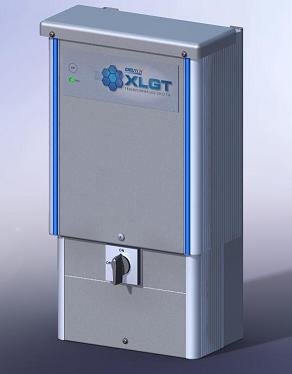
Itek is excited to announce a partnership with Exeltech, manufacturer of the XLGT grid-tie inverters, to offer our customers the full package of solar power from modules to inverters! Through this partnership, itek will be a licensed manufacturer of the Exeltech XLGT, providing a one-stop shop for PV products manufactured in the state of Washington.

With over 20 years of outstanding reliability and leadership in the inverter industry, Exeltech will maintain design control of the product, while itek handles manufacturing, bringing the manufactured in Washington XLGT to market in December 2011.

At 14 lbs, the 1800-watt output XLGT is the lightest grid-tie inverter in its class. With a CEC peak efficiency rating of 97.8%, it's also the most efficient! XLGT inverters will operate in power systems with 120V, 240V, and 208V three-phase (wye) topologies. The XLGT is fully certified to UL1741, FCC Part 15 Class B,

About Exeltech
Exeltech has been an innovative force in the global inverter industry for more than 20 years. Holder of multiple patents, Exeltech pioneered such developments as the smallest high-frequency true-sine-wave inverters on the market, as well as massively parallel inverter systems. With more than 35,000 different configurations, Exeltech offers a solution to almost any inverter need. Exeltech was recently selected by the International Space Station Consortium as exclusive supplier to design and build several custom inverters for the International Space Station.

For more information about itek: www.itekenergy.com

For more information about Exeltech and Exeltech products: www.exeltech.com